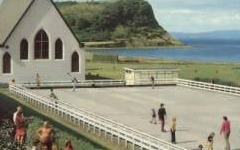
While Filey was nearing completion, the Admiralty requested Billy Butlin to establish another camp on the South Coast. However, this initiative was abandoned when the entire North Coast of France came under German control. Instead, they instructed him to construct two additional camps, one in North Wales and the other on Scotland's west coast. The location selected for the Scottish camp was Ayr, situated four miles south of the town on 85 acres of gently sloping terrain that was part of the Heads of Ayr coastline.
Similar to Pwllheli, the camp's design was significantly shaped by the aspiration to convert the site into a holiday camp after the war. Construction began in 1940, and it opened the following year as HMS Scotia, serving as a Navy training camp throughout the war. After the war was over the Navy began moving out and the camp was eventually transferred into Butlin's ownership in 1946. After some hurried construction and repairs the site opened the following year as a holiday camp. Upon opening it could accommodate close to 2000 guests but this was eventually increased to over 5000.
Originally, the Redcoats at this location donned kilts, and even Bobby Butlin, Bill's son, served as a Redcoat during his school holidays. In the early days, holidaymakers at the Ayr camp experienced a unique form of awakening. Rather than the early morning tune broadcast by Radio Butlin, two pipers would march solemnly around the camp, rousing every camper!
The Heads of Ayr Hotel was established in the 1940s, located on the main road next to the camp entrance. An old railway line traversed the site, prompting proposals to construct a new station to cater to the camp and hotel. Trains provided direct service from Ayr, Glasgow, Newcastle, and Leeds, serving as the primary transport link in the early years. The railway line remained operational until the end of 1968.
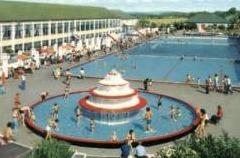
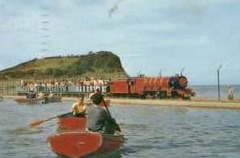
In the following years, additional attractions were introduced, including an indoor swimming pool, a miniature railway in 1956, and the first Butlins chairlifts in 1959. In 1965, a pair of full-size steam locomotives were brought in. A carousel was added in the late 1950s and operated for over 40 years; it still exists today at Dreamland Margate.
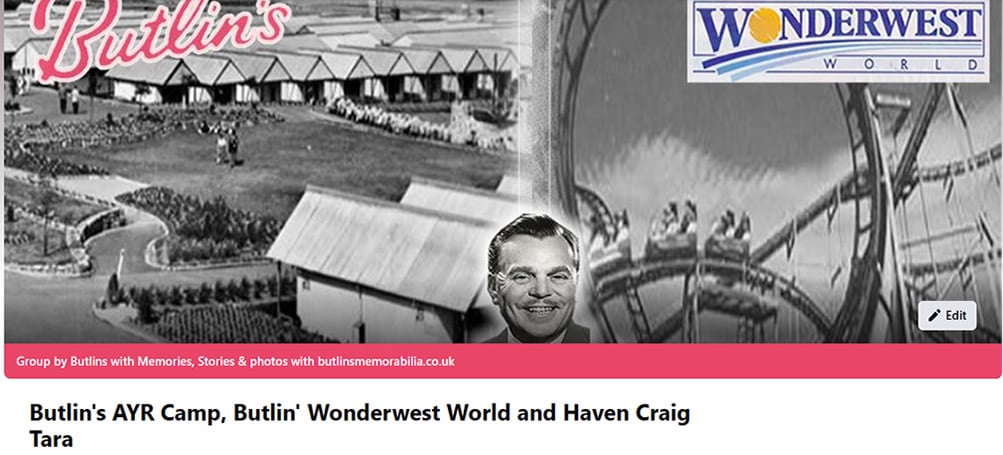
In 1980, a £1.8 million investment initiative launched, but by 1987 the camp's future seemed uncertain, as it ranked as the least profitable of the last five remaining camps. The concluding months of the 1987 season were reviewed to assess the viability of further investment in the complex, and on 14th October, Butlin's finally revealed a £25 million investment plan. This decision followed the Scottish Tourist Board's commitment to support the project. Construction began the next year, with an immediate investment of £12 million directed towards a new indoor water complex, three-star accommodations for all holidaymakers, a new 900-seat food court, and upgrades to the caravan park. The remaining £13 million was allocated over the subsequent five years, culminating in the site's renaming to AYR Holiday World and then shortly after to its final name of Wonderwest World.
Yet, this development was short-lived. A decade later, it was announced that the camps at Ayr and Pwllheli would be transferred to Butlin's sister company, Haven, at the start of the 1999 season. Another £25 million development initiative was unveiled, shared between the two parks. Renovations commenced swiftly, leading to the removal of many cherished attractions, such as the chairlift, miniature railway, and amusement park. Luxury caravans replaced a significant number of the old chalets, most of which were demolished alongside some main camp structures. The new approach aimed to provide fewer but more contemporary attractions, with a focus on appealing to younger families. The site continues to operate today, now known as Craig Tara, a Haven All-Action holiday park. The official reopening took place in 1999, conducted by football icon Kenny Dalglish.