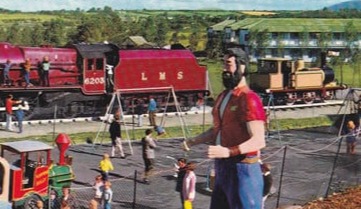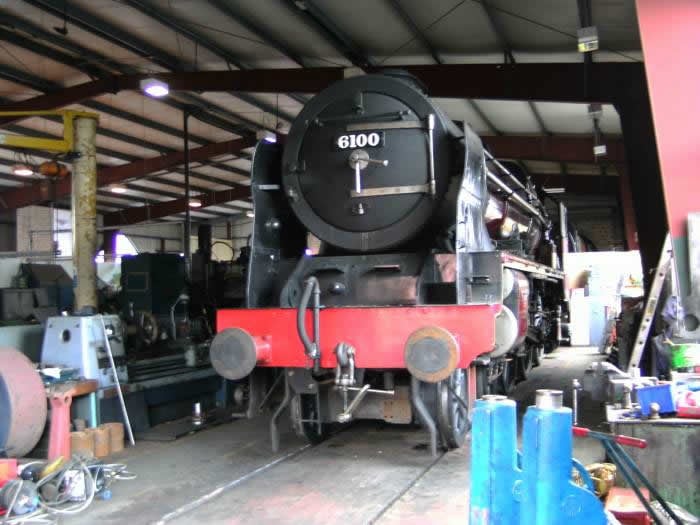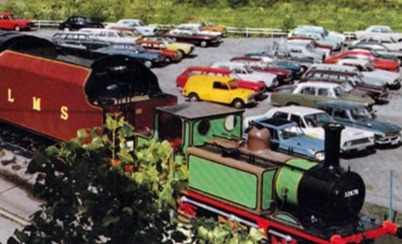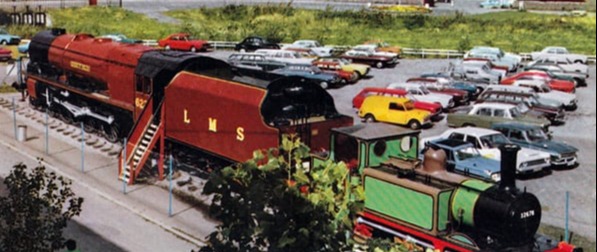
Billy Butlin began purchasing redundant steam engines from the national railway system in the early 1960s. The intention was to place them in static displays at the camps, creating an unusual attraction at relatively little cost. Eight locomotives were bought, two a piece for Pwllheli, Skegness, Minehead and Ayr. By the early to mid-1970s, sea salt air was taking its toll, and Butlin’s was not keen to continue financing maintenance and upkeep. The company decided the locomotives would be better suited to other locations and began searching nationwide for new homes. It wished to retain ownership, while offering free loans to organisations willing to maintain the engines and make them available for public viewing. The Transport Trust became involved, and 23 museums and railways showed interest. A pair were sold in the 1970s; the rest continued to belong to Butlin’s through to the late 1980s.
Images shown here are from the Butlins Memorabilia website (click to see more) unless specified under the photo.
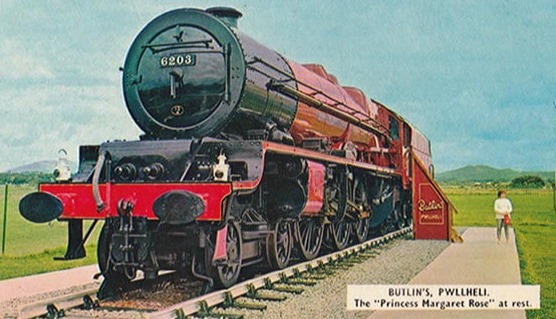
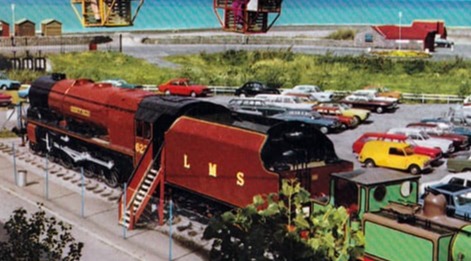
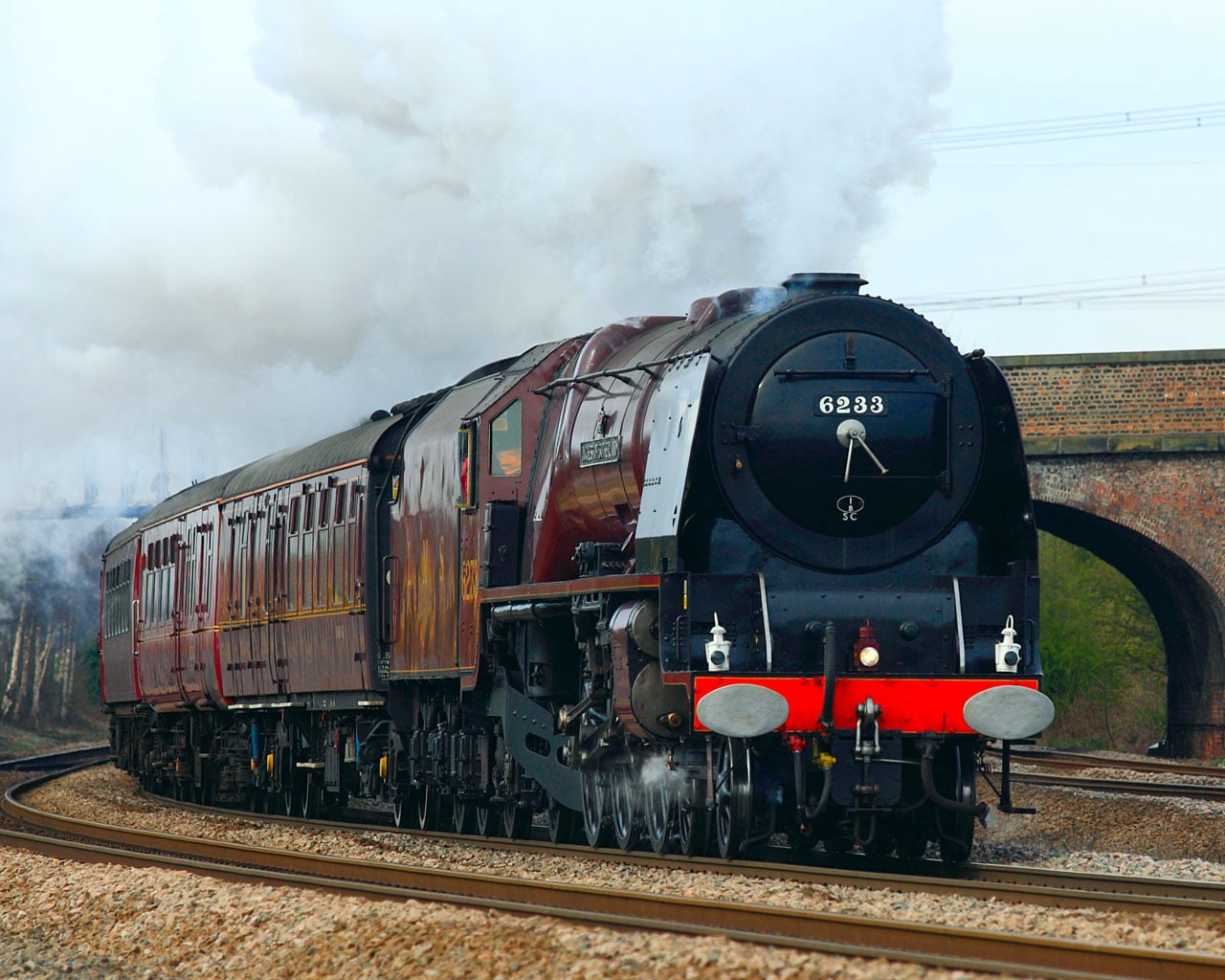
After covering 1.5 million miles in service, mainly on express trains between London and Scotland, the Princess Margaret Rose locomotive was bought by Sir Billy Butlin in April 1963. Crewe Works carried out a cosmetic restoration to get it ready for its new life at Butlin's Pwllheli. Once the restoration had been completed, the locomotive was then taken by rail to Pwllheli, where it arrived in May 1963. It was situated next to the amusement park and boating lake.
Further along the timeline, Butlin’s offered it on loan to the Midland Railway Centre in Butterley, Derbyshire, in April 1974. Work to prepare it for transfer started in January 1975, with railway volunteers assisting. The demanding project required 500 yards of special track to be laid to link with the main line, and more than 1,300 man-hours were spent over the next four months. The locomotive finally left the camp on 11 May 1975, towed by a diesel along the main line to its new Derbyshire base.
The locomotive stood on static display there until 1985, when Butlin’s offered it for outright purchase at £60,000. The purchase was approved, and a new charitable trust was established to oversee its restoration to operating condition. The work was completed in 1990. Today, the locomotive remains at the Midland Railway Centre, owned by the Princess Royal Class Locomotive Trust.
Bought by Sir Billy Butlin in February 1964 after completing more than 1.1 million miles in service, including nearly 50 years on the Isle of Wight. The small locomotive received a cosmetic restoration at Eastleigh Works, arrived at Pwllheli in September 1964, and was displayed beside 'Princess Margaret Rose'.
It was loaned to the Isle of Wight Locomotive Society and left Butlin's Pwllheli by road on 26 January 1973. In 1976, Butlin's offered to sell it to the Society for £3,500, an offer the Society accepted. A painstaking, gradual restoration to working order followed and was completed in 1989. You can see this train on the Isle of Wight Steam Railway website, where it's currently being used
This locomotive became famous in 1933 when it was shipped across the Atlantic to appear at Chicago’s Century of Progress Exposition. After returning to the UK, it spent its working life hauling fast express passenger trains. Billy Butlin purchased it at the end of 1962, and it was cosmetically restored at Crewe. It arrived at Skegness on 18 July 1963 aboard a Pickford’s low loader, where it was welcomed by the pipes and drums of the 1st Battalion, Royal Scots.
Loaned to Bressingham Steam Museum in Diss, Norfolk, it left the camp on 16 March 1971. Following an overhaul, it returned to working order the next year, but became a static exhibit again in 1978 when extensive repairs were required. In May 1989, it was sold outright to Bressingham for £100,000. The price covered all four former Butlin’s locomotives kept there. Work is currently underway to restore it to operating condition following a Lottery grant of £339,000, which also covers the restoration of another former Butlin’s locomotive at Bressingham, Martello (see below).
It is now at Crewe Heritage Centre, and the final stages of its return to main-line operation are underway. It is hoped that Royal Scot will haul the Coast to Coast excursion from Liverpool to Scarborough on 4 July 2009.
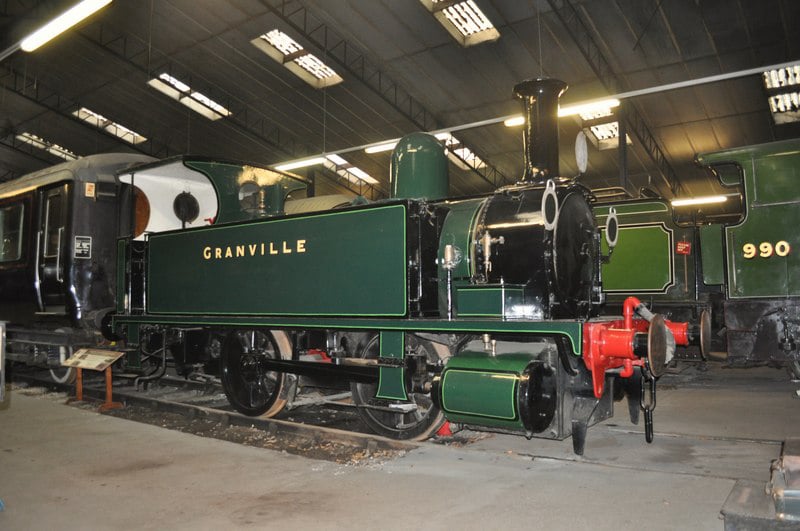
he Granville locomotive spent most of this period at Eastleigh Works before being transferred to Southampton Docks, where it was named Granville. It performed a variety of duties, including shunting in the Winchester goods yard during its final years.
Sir Billy Butlin purchased the locomotive in 1964 and arranged for its cosmetic restoration. After the work was completed, it was transported by road to Butlin’s Skegness, arriving in October that year. On 15 March 1971, it left the camp by road for Norfolk and the Bressingham Steam Museum. It remains there on static display and was one of four former Butlin’s locomotives Bressingham purchased outright in the 1989 disposal sale.
After appearing at the 1939 New York World’s Fair, this powerful machine returned to the UK and spent its working life hauling prestigious passenger trains for the LMS and British Railways, covering more than 1.4 million miles. Sir Billy Butlin purchased it in 1964 and sent it to Crewe Works for cosmetic restoration. It was then transported by rail to Minehead, arriving at the camp on Sunday, 3 May 1964, where it was placed on static display beside the Beachcomber Building.
It left the camp on 10 March 1975 and was taken by rail to the former GWR works at Swindon, where it was repainted and cleaned before continuing to the National Railway Museum in York. Restored to working order in 1980, it became a familiar sight on Britain’s main lines. In 1987, it was finally bought outright from Butlins for approximately £60,000. After almost two decades on the main lines, the train once again became a static exhibit, taking a prominent position in the National Railway Museum’s main hall.
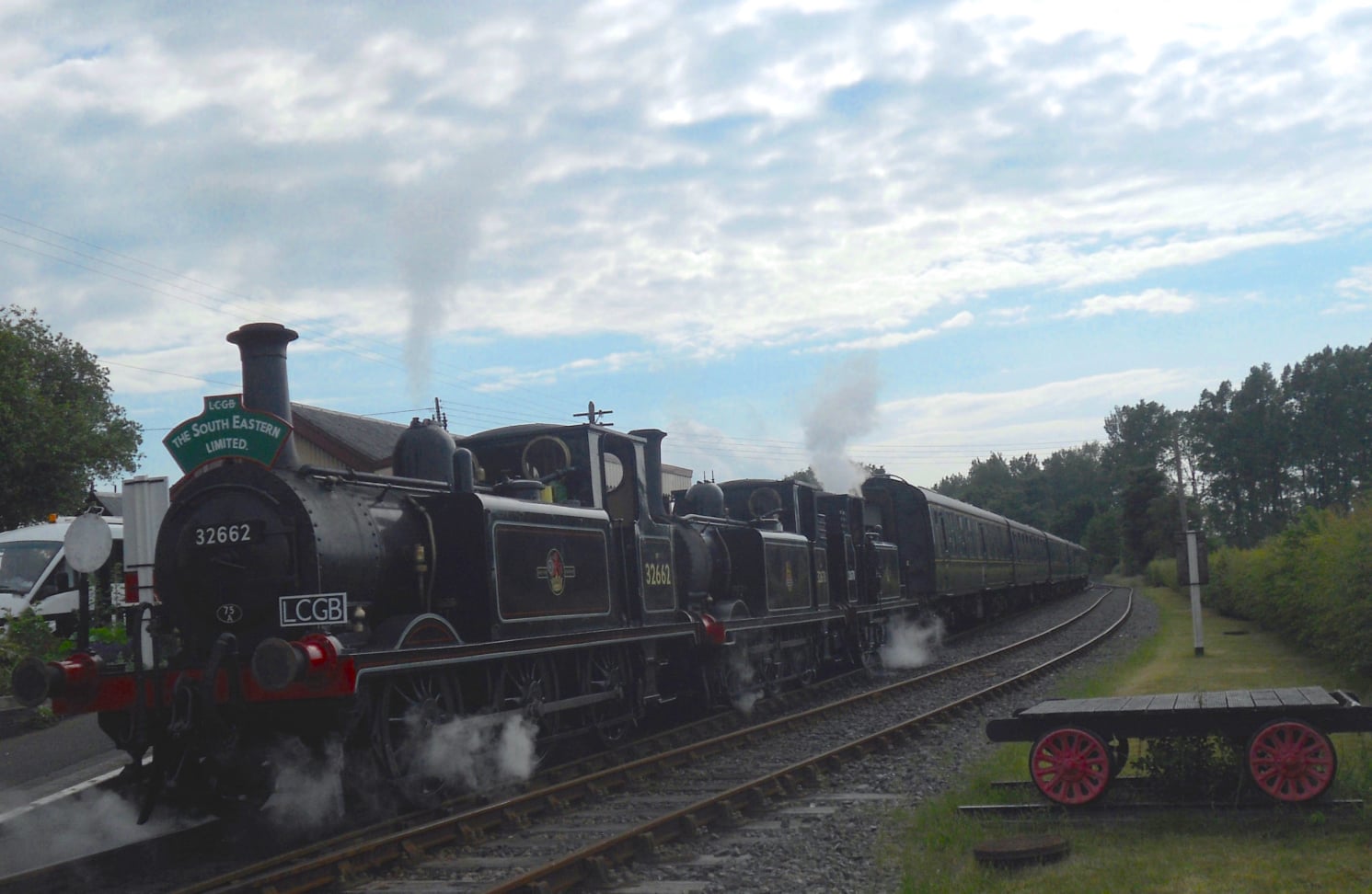
This compact 6-wheeler spent more than 80 years working on the branch lines of southern England. It retired in the early 1960s after covering over 1.3 million miles. Purchased by Billy Butlin, it was sent to Minehead to join 'Duchess of Hamilton', arriving on 25th July 1964.
It remained at the camp until April 1975, when it was sold and transferred to a new railway preservation project that would later become the adjoining West Somerset Railway, now operating regular steam services from Minehead. Sold again in the early '80s, it moved to Woolwich in London, then in 1988 to the Kent & East Sussex Railway at Tenterden in Kent. It remains there today and was restored to working order in 1999.
‘Duchess of Sutherland’, together with ‘Princess Margaret Rose’ and ‘Duchess of Hamilton’ (see above), formed a trio of LMS express passenger locomotives. They were among the most powerful steam engines ever built in the UK and regularly hauled express passenger trains at speeds exceeding 100 mph. This locomotive was bought by Billy Butlin in 1964, after it had travelled more than 1.6 million miles in service. Following repainting at Crewe Works, it was transported by rail to the Ayr camp, arriving on 23 October 1964. Billy Butlin intended to place it at a central location within the camp, but the steep access road and narrow railway bridge made this impossible. Instead, it was unloaded near the camp’s main entrance and road. It stayed there until 24 February 1971, when it was removed—by road this time, as the railway line had since closed—and taken on the long journey to Bressingham Steam Museum in Norfolk under a free-loan agreement.
Restored to working order in 1974, the locomotive spent a couple of years operating on the museum’s short test track. It was one of four former Butlins locomotives purchased outright by Bressingham in 1989 (see above). In 1996, it was sold once more, this time to the charity that had previously acquired ‘Princess Margaret Rose’ from Butlins: the Princess Royal Class Locomotive Trust (PRCLT). The Trust received a Lottery grant of approximately £350,000 to restore the locomotive to full working order, a project completed in 2001. On 11 June 2002, it was specially selected to haul the Royal Train carrying the Queen and Prince Philip. This marked the first time in 35 years that a steam locomotive had received this honour. Billy Butlin would have been proud! Since then, the locomotive has undertaken several special journeys, including hauling the Royal Train again in March 2005, with Prince Charles as a passenger.
The oldest locomotive in the Butlins fleet, this small six-wheeler spent 89 years in service on the Southern Railway before Billy Butlin bought it in 1964. After a cosmetic restoration, it was transported by rail to Ayr, arriving at the camp on 19 October that year.
On 25 February 1971, it left by road to join the growing collection of former Butlins loan engines at Bressingham in Norfolk. In 1989, it was one of four ex-Butlins locomotives purchased outright. It remains there today and has been restored to running order with the help of a Lottery grant, which also funded the restoration of 'Royal Scot'. The West Somerset Railway runs to Minehead and was the route used to remove the Duchess of Hamilton from Butlins in 1975.