Information kindly submitted by Ron Stanway - General Manager, Entertainment & Promotions for the Butlin Group, 1974 to 1990 and Competition Producer, 1968 to 1990
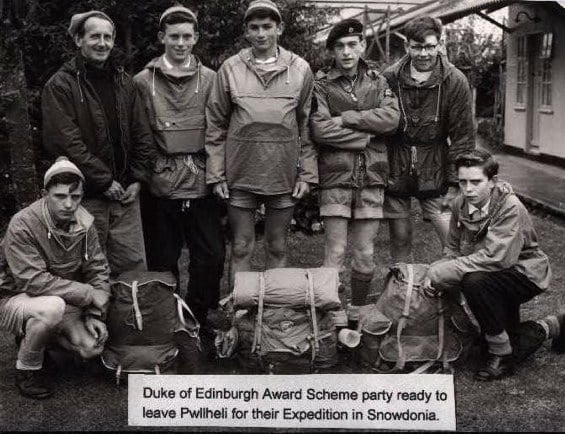
From 1960 to 1970, Butlin’s worked with the Duke of Edinburgh Award Scheme, providing free accommodation and meals at Ayr, Filey and Pwllheli. These three Centres were chosen because their surrounding countryside was especially suitable for expedition training and assessment. Butlin’s bought the equipment participants were likely to need, including anoraks, overtrousers, tents, ground sheets and Primus stoves, and stored it at each site. The Catering Buyer at each Centre also arranged for smaller packs of food—more practical to carry in kit-bags than the large catering packs normally used to be stocked. Items such as baked beans, soups, dried vegetables, raisins and chocolate were provided for each party.
Each group received advance information about the supplies available so that they could plan what they needed. This planning formed part of the expedition test. Other provisions included paraffin and methylated spirit for the Primus stoves, as well as sausage, bacon and some other meats. Packed lunches were supplied on departure day so that groups would not have to prepare meals too early in their expedition. In return for providing the food and equipment, Butlin’s asked the Duke of Edinburgh's office to focus its booking publicity on disadvantaged inner-city communities. This enabled us to support people with fewer opportunities.
Each team of eight—two leaders and six candidates—was provided with free accommodation for one week. Four two-berth chalets and a dining table seating eight were reserved for them. Teams arrived on Saturday by train, coach, or their own transport. After checking in, they reported to the Entertainment Office, where the Entertainment Manager met them and issued any equipment they needed. Food supplies had been ordered in advance and were collected from the Catering Store by arrangement. Sunday was set aside for practising tasks such as pitching tents and making general preparations for the expedition. Teams without their own transport were given a free minibus ride by Butlin’s to the expedition’s starting point, and were collected from a pre-arranged location on Thursday. The Gold Award required three nights in the field; Bronze and Silver awards required fewer. Fridays were devoted to cleaning and returning borrowed equipment, and teams left for home on Saturday.
Some teams attended for training, while others came to be tested. Official assessors observed and evaluated them throughout their time away. The D of E office arranged all assessors, who were seldom introduced to Butlin’s staff or even seen at a Centre. The Chief Warden of the North Yorkshire Moors, however, always wanted to meet teams before they set out, whether for training or testing. He needed to know in advance whether he or his wardens might be called out, since sudden mists could make the moors particularly hazardous. At Filey, a meeting was always arranged for Saturday evening so the Warden could assess each group’s capabilities.