The Butlin's Monorail Train
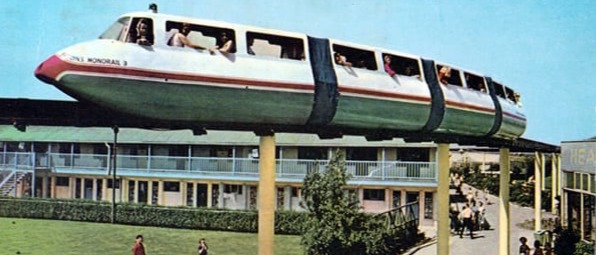
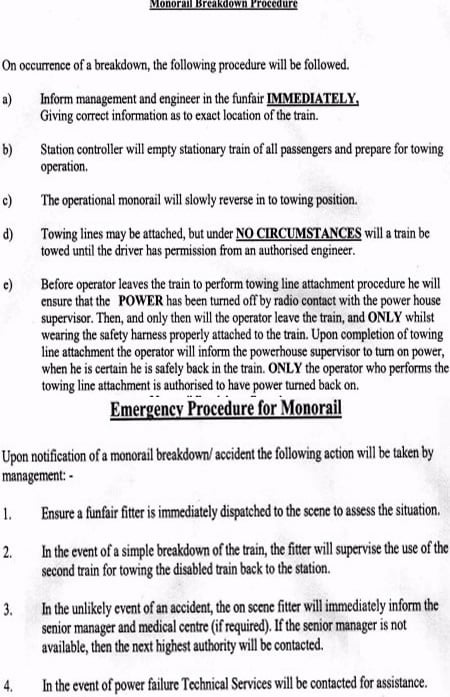
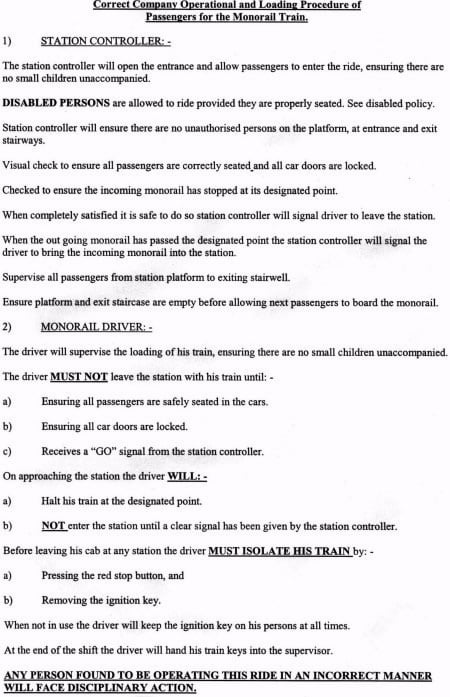
The UK’s first commercial monorail system opened at the Skegness camp in May 1965. Its route formed a large loop of nearly a mile, passing through a large part of the camp. Built from 320 tons of steel and supported by 160 columns, the track ran 16 feet above ground. It had two stations: one near the indoor pool and another beside the chairlift station on the north side. The monorail was never designed as a form of transport; its sole purpose was to offer a novel and enjoyable amusement ride. Three rocket-shaped trains were supplied, each carrying up to 50 passengers at a maximum speed of 15 mph. The system cost around £50,000 in 1965 (just over a million pounds in 2026). The original trains were replaced by newer models in the early 1990s, and the monorail continued operating until the end of 2002.
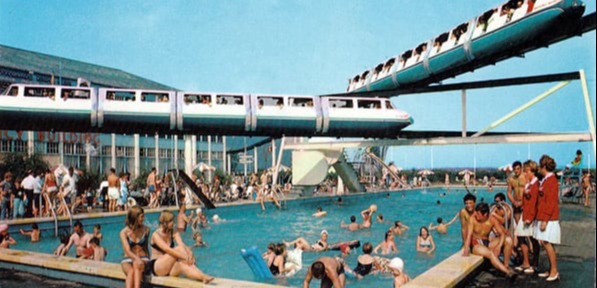
The second Butlin’s monorail began operating at the Minehead camp on 13 May 1967. Its track covered a shorter half-mile route, forming a figure-eight loop that passed the Princes and Regency buildings. Construction took four months, and the track stood between 16 and 30 feet above ground. The two tracks crossed on a striking structure above the outdoor swimming pool. Two 40-seat trains operated the service, which had a single station behind the Princess building (which was later moved to the main funfair ground at the front during the Somerwest World era). The Minehead monorail closed after an accident in the summer of 1996, when one train struck the rear of another. Seven people received treatment for minor injuries, and Butlins was fined £22,500 in total. The cost of upgrading the system was considered too high, so it was shut permanently. The structure remained for a further two years before being dismantled in the winter of 1998. The crossing area is now occupied by the Skyline Pavilion.